Universitas Muhammadiyah Purworejo (UMPWR) – The Kosabangsa Program (Social Collaboration for Community Empowerment) in collaboration with the Rajawali College of Economics (STIERA) Purworejo represents a tangible commitment of higher education institutions in addressing economic development challenges in disaster-prone areas, with strong support from the local government and community of Donorejo Village.
Kosabangsa is a program initiated by the Directorate of Research and Community Service (DPPM), under the Directorate General of Research and Development (DITJEN Risbang), Ministry of Higher Education, Science, and Technology (Kemendiktisaintek) for the year 2025.
The program, titled “Developing a Disaster-Resilient Village: Implementation of Landslide Detection Devices and Solar Cell-Based Coffee Processing Systems in Donorejo Village, Purworejo,” involves the STIERA implementation team consisting of Adi Sucipto, S.E., M.M. (Team Leader), along with members Dr. Hesti Respatingsih, S.E., M.Par., and Rusmiyatun, S.E., M.Ak., as well as student participants. The mentoring team from UMPWR includes Prof. Dr. Suyitno, M.Pd. (Chief Mentor), Dr. Jeki Wibawanti, M.Eng., M.Si., and Dr. Murry Hermawan Saputra, M.Sc.
The 2025 Kosabangsa Program engages two main community partners: the Bangun Semi Farmer Group in Donorejo, focusing on coffee cultivation and processing, and the Disaster Response Volunteers & Disaster Risk Reduction Forum (FPRB) of Donorejo Village.
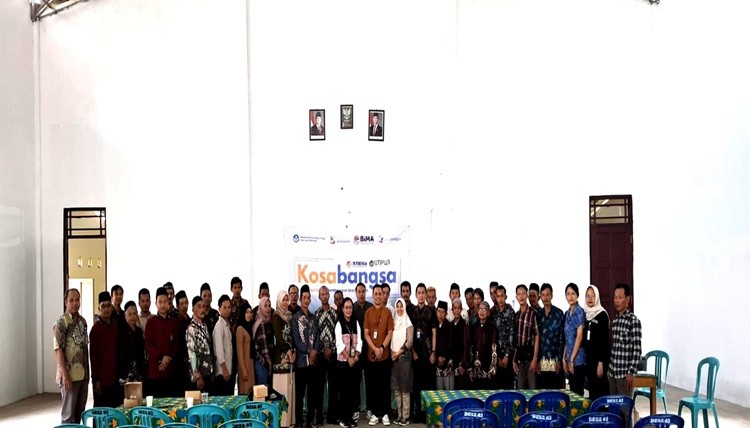
According to Adi Sucipto, S.E., M.M., Team Leader, Donorejo Village, which is located in a hilly area, faces both landslide risks and economic opportunities through coffee commodities. Through this Kosabangsa program, the team introduced an early-warning landslide detection system designed to alert the community promptly in case of potential landslides.
Prof. Dr. Suyitno, M.Pd., Chief Mentor, added that the Kosabangsa team also developed a solar cell-based coffee processing system, allowing production activities to continue efficiently even in limited electricity conditions. This initiative aligns with efforts to promote renewable energy utilization at the village level.
Dr. Hesti Respatingsih, S.E., M.Par., Chairperson of STIERA, explained that this cross-institutional collaboration was designed to deliver real solutions for local communities.
“This program not only addresses disaster mitigation but also enhances the community’s economic value through the downstream development of coffee products,” she stated.
Rusmiyatun, S.E., M.Ak., one of the implementing team members, expressed her hope that Donorejo Village will grow into an economically independent and disaster-resilient village through the development of its coffee commodity and preparedness initiatives.
Meanwhile, Dr. Jeki Wibawanti, M.Eng., M.Si., representing UMPWR as a mentor, highlighted that the program also provides a valuable platform for students to engage directly in technology- and community-based service activities.
“This is an excellent opportunity to integrate academic knowledge with real-world applications that directly benefit society,” she said.
Dr. Murry Hermawan Saputra, M.Sc., added that through this initiative, Donorejo Village is expected to become a model for disaster-resilient and energy-efficient coffee processing villages, which can be replicated in other areas across Purworejo Regency and beyond